Navigating Sustainable Travel: Introducing the SlowOut Impact Framework
Measuring Impact from Travel and Tourism Through Proprietary Frameworks


Understanding the Complexity of Sustainable Travel
Sustainable travel has emerged as a pertinent concept within the tourism industry, aiming to minimize the environmental impact of travel while promoting positive socio-economic effects on local communities. However, the notion of sustainable travel is often marred by a myriad of challenges. One of the primary obstacles travelers face is the overwhelming amount of certifications, labels, and eco-claims that seek to define what is truly sustainable. As travelers strive to make environmentally conscious choices, they frequently encounter a plethora of conflicting information, which can create confusion.
The saturation of sustainability marketing further complicates this landscape. With countless businesses vying for consumer attention, marketing strategies often prioritize attracting eco-conscious travelers. This can lead to misrepresentation of practices through a phenomenon known as greenwashing. In essence, greenwashing involves companies presenting an exaggerated or misleading view of their environmental efforts, which can mask the true sustainability of their operations. This poses a significant risk for travelers who wish to support genuinely eco-friendly initiatives but are unable to discern the authentic from the deceptive.
Additionally, the complexities of sustainable travel extend beyond marketing practices. Travelers may find themselves grappling with varying definitions of sustainability, which can differ widely depending on regional contexts, cultures, and environmental issues. A holistic understanding of sustainable travel thus requires travelers to navigate these nuances, evaluating their impact on the environment, local economies, and communities they engage with. It is essential for travelers to approach this journey with a critical mindset, recognizing the intricate layers that define sustainable travel rather than viewing it as a straightforward endeavor.
The Limits of Certifications and Standards
In the travel industry, sustainability certifications, ratings, and labels are often viewed as pivotal benchmarks for determining the environmental and social responsibility of a travel experience. However, an increasing body of evidence suggests that these certifications have significant limitations when it comes to accurately gauging genuine sustainability. Many certifications are influenced by the marketing strategies of the organizations involved, which can shift their focus from true sustainability practices to merely enhancing visibility.
For instance, the ease of obtaining certain certifications often raises questions about their actual rigor. Travel companies may pay for certifications or tailor their operations to meet the minimum criteria required for a label, thus creating an illusion of sustainability without implementing meaningful practices. This commodification of sustainability can mislead travelers and discourage them from critically evaluating the impact of their travel choices.
Moreover, the landscape of travel experiences is complex, and meaningful sustainability cannot be distilled into simple checklists or badges. Travelers might assume that a certified provider automatically guarantees ethical practices, but such assumptions ignore the multifaceted nature of responsible tourism. A badge might signal adherence to specific guidelines, but it does not account for the broader impact on local communities, ecosystems, or cultural integrity.
In a world increasingly influenced by consumerism and superficial assessments, the call for deeper evaluation of travel experiences has grown stronger. This necessitates a move beyond surface-level certifications toward a more rigorous, informed approach that genuinely considers the sustainability and ethical considerations underlying travel experiences. Travelers must therefore engage in conscious decision-making that goes beyond token certifications and allows for a more profound understanding of sustainable practices.
Introducing the Slowout Impact Framework (SIF v1)
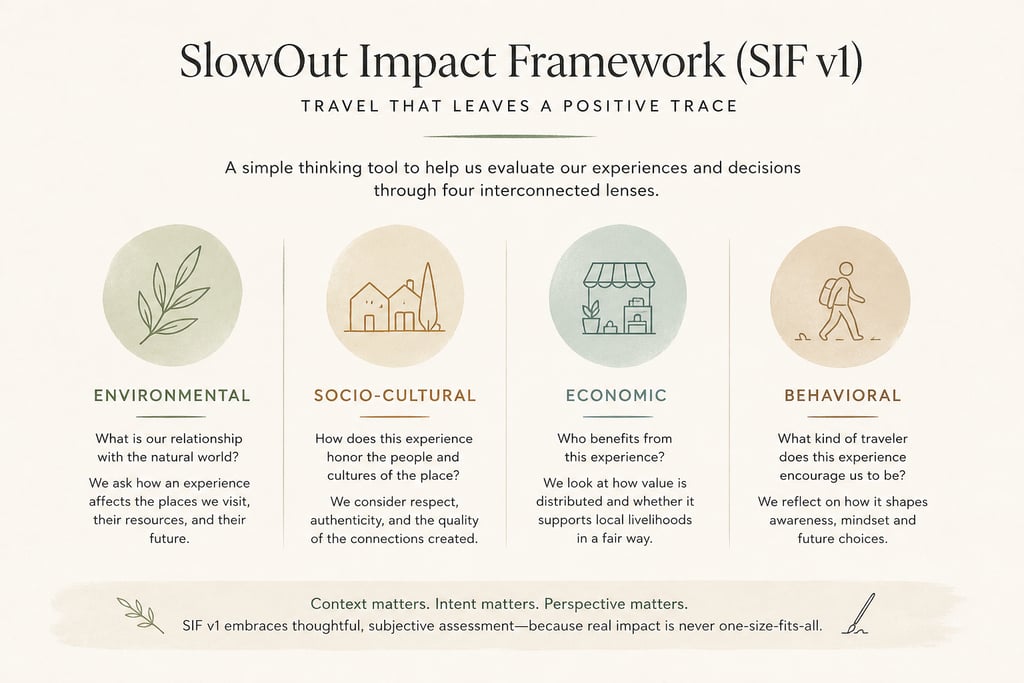
The Slowout Impact Framework (SIF v1) represents an innovative approach to understanding and evaluating travel experiences. This framework is designed to assist travelers in making informed decisions that align with sustainable practices. Rather than relying on rigid metrics or regulatory compliance, SIF v1 emphasizes the importance of a thoughtful reflection on the implications of travel choices. By examining four key pillars strongly based on established institutional resources—environmental, socio-cultural, economic, and behavioral—SIF v1 offers a comprehensive lens through which travelers can assess their impact.
The environmental pillar focuses on the ecological effects of travel, urging individuals to consider the carbon footprint associated with transportation, the conservation of natural resources, and the preservation of biodiversity. Travelers are encouraged to embrace practices that mitigate harm to both local ecosystems and the planet at large.
The socio-cultural component emphasizes the significance of cultural preservation and respectful engagement with local communities. It challenges travelers to reflect on their role in promoting cultural exchange and ensuring that their presence positively contributes to the social fabric of the destination. This pillar advocates for responsible interactions that foster mutual respect and understanding.
The economic aspect examines the underlying financial implications of travel. Here, travelers are prompted to consider how their spending supports local economies and contributes to community well-being. Sustainable travel choices prioritize local businesses and promote equitable economic practices, which in turn nurture healthy communities.
Finally, the behavioral pillar invites introspection into travelers' habits and attitudes, encouraging mindful consumption and awareness of the impact one's travel behavior has on surroundings and experiences. This reflective approach allows travelers to cultivate a deeper connection with their destinations.
The Role of Subjective Assessment in Travel Impact
Travel is often viewed through a lens of tangible metrics—carbon footprints, expenditure, and duration of stay—yet this seemingly objective data often overlooks the rich tapestry of subjective experiences that shape the true impact of travel. Subjective assessment plays a crucial role in evaluating the various effects of travel, highlighting that not all impacts can be quantified. Each individual's experience is distinctly influenced by the context in which they travel, which includes factors such as location, behavior, and intent.
For instance, a traveler might visit a region with the intention of supporting local communities and preserving cultural heritage. While an objective measurement may reflect their expenditures, the subjective experience of connecting with locals and understanding their traditions cannot be confined to numbers. This personal engagement often results in deeper appreciation and advocacy for sustainability practices, showcasing the importance of maintaining subjective assessments in travel impact evaluations.
Additionally, misinterpretations can arise from the heavy reliance on sustainability labels and marketing within the travel industry. The phenomenon of greenwashing has become prevalent, where companies promote environmentally friendly practices without substantive backing. Travelers must be cautious; a label does not guarantee a positive impact. Here, subjective assessment can guide decisions, as personal values, understanding, and research play a vital role in discerning genuine sustainability from mere marketing.
Ultimately, recognizing the significance of subjective evaluations allows for a more holistic understanding of the travel experience. Embracing this approach enhances efforts to foster sustainable travel, ensuring that the nuances of individual experiences and intentions are acknowledged as strengths in navigating the complexities of travel impact.